
Kamadhatu of Borobudur: The Realm of Desire and the Law of Karma

Borobudur Temple, the magnificent Mahayana Buddhist monument built in the 8th–9th century CE in Magelang, Central Java, is far more than a colossal stone structure. It is a physical embodiment of humanity’s spiritual journey toward enlightenment (nirvana). One of the most intriguing and widely discussed elements is Kamadhatu — the lowest level of the temple, symbolizing the “realm of desire.” While this interpretation is extremely popular, modern scholarship also offers important nuances and debates that enrich our understanding of Borobudur. This in-depth article explores the origins, meaning, reliefs, history, and contemporary significance of Kamadhatu — perfect reading before your next visit to this UNESCO World Heritage Site.
Understanding Kamadhatu in Buddhist Cosmology
In Buddhist teachings, the universe is divided into three realms (Tridhatu or Triloka):
Kāmadhātu (realm of desire) — the lowest level, where beings are still bound by sensual pleasures, cravings, and worldly emotions.
Rūpadhātu (realm of form) — the middle level, where desire has diminished but physical forms still exist.
Arūpadhātu (realm of formlessness) — the highest level, closest to nirvana, free from both form and desire.
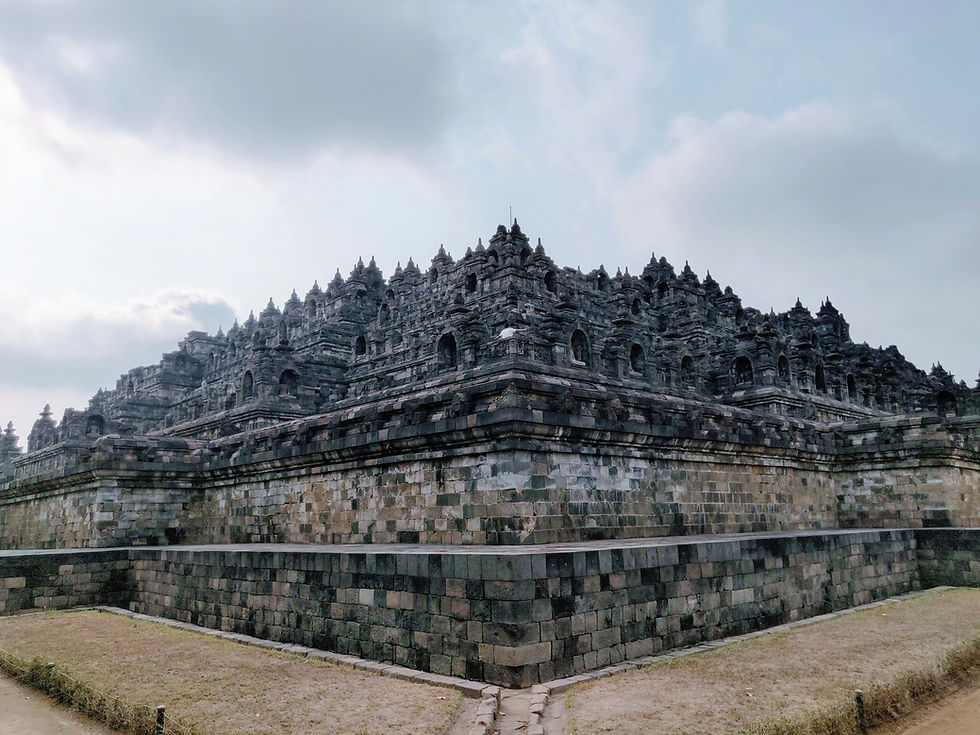
Kamadhatu represents ordinary human life, still trapped in the cycle of samsara (birth and rebirth) due to karma. In Borobudur, this realm is conventionally represented by the base or “foot” of the temple, forming the foundation of the entire monument.
Kamadhatu at Borobudur: The Hidden Foot and Karmavibhangga Reliefs
Physically, Kamadhatu is located at the very bottom of the temple, known as the hidden foot. When Borobudur was originally constructed, this base featured 160 narrative relief panels illustrating the Karmavibhangga (or Mahakarmavibhangga Sutra) — a Buddhist text explaining the law of cause and effect (karma).
These remarkable carvings depict:
Good and bad deeds and their consequences (e.g., murderers suffering in hell, generous people enjoying heavenly rewards).
Everyday life in ancient Java: trade, farming, hunting, weddings, religious ceremonies, as well as scenes of violence, luxury, and sensuality that mirror the desires of the worldly realm.
The endless cycle of karma, showing how actions in this life shape future existences.
Many panels include short inscriptions that once served as guides for ancient pilgrims. The total relief surface area across Borobudur is approximately 2,500 square meters, with Kamadhatu contributing the foundational 160 panels.
Why Are the Kamadhatu Reliefs “Hidden”?
In 1885, Dutch archaeologist IJzerman accidentally discovered these hidden reliefs (later studied in depth by Th. van Erp). However, most were re-covered with an additional layer of stone (encasement). The primary scientific consensus is that the covering was done for structural stability — the temple was experiencing ground pressure and landslide risks.
A popular myth claims the reliefs were hidden because some scenes were “too vulgar” or erotic. While a few panels do graphically portray human desires (including sexuality and violence), most experts consider structural reasons the real motive. Today, only a small section at the southeast corner remains exposed for visitors. The rest of the original panels are preserved and displayed at the nearby Karmawibhangga Museum.
Philosophical Meaning and the Pilgrim’s Journey
Kamadhatu is not mere decoration — it serves as the starting point of the spiritual journey for pilgrims. As visitors climb Borobudur from the east, they symbolically begin in the realm of desire. The message is clear: to reach enlightenment, one must first understand and transcend worldly cravings.
Built by the Sailendra dynasty, Borobudur reflects a beautiful cultural synthesis of Javanese, Hindu, and Buddhist elements. The reliefs incorporate local flora, fauna, and daily life, making the teachings feel deeply rooted in Indonesian soil.
Why Kamadhatu Matters Today
In our fast-paced, material-driven world, the lessons of Kamadhatu feel remarkably relevant. The reliefs remind us that every choice has consequences and that true freedom begins with awareness of our desires. For travelers, standing before these ancient stones offers a powerful moment of reflection amid one of humanity’s greatest architectural achievements.
Kamadhatu is just the beginning of an unforgettable journey through Borobudur’s nine levels. Whether you’re a history enthusiast, spiritual seeker, or simply a curious traveler, this ancient monument continues to inspire millions every year.
Book your hassle-free Borobudur tour with Kresna Tour and uncover the deeper meanings hidden within these sacred stones.

Comments